
Report Fraud Alert: More than £86,000 stolen in nine days by fraudsters posing as Amazon
Criminals are impersonating Amazon and contacting customers out of the blue claiming suspicious activity has occurred on their account, new data shows.
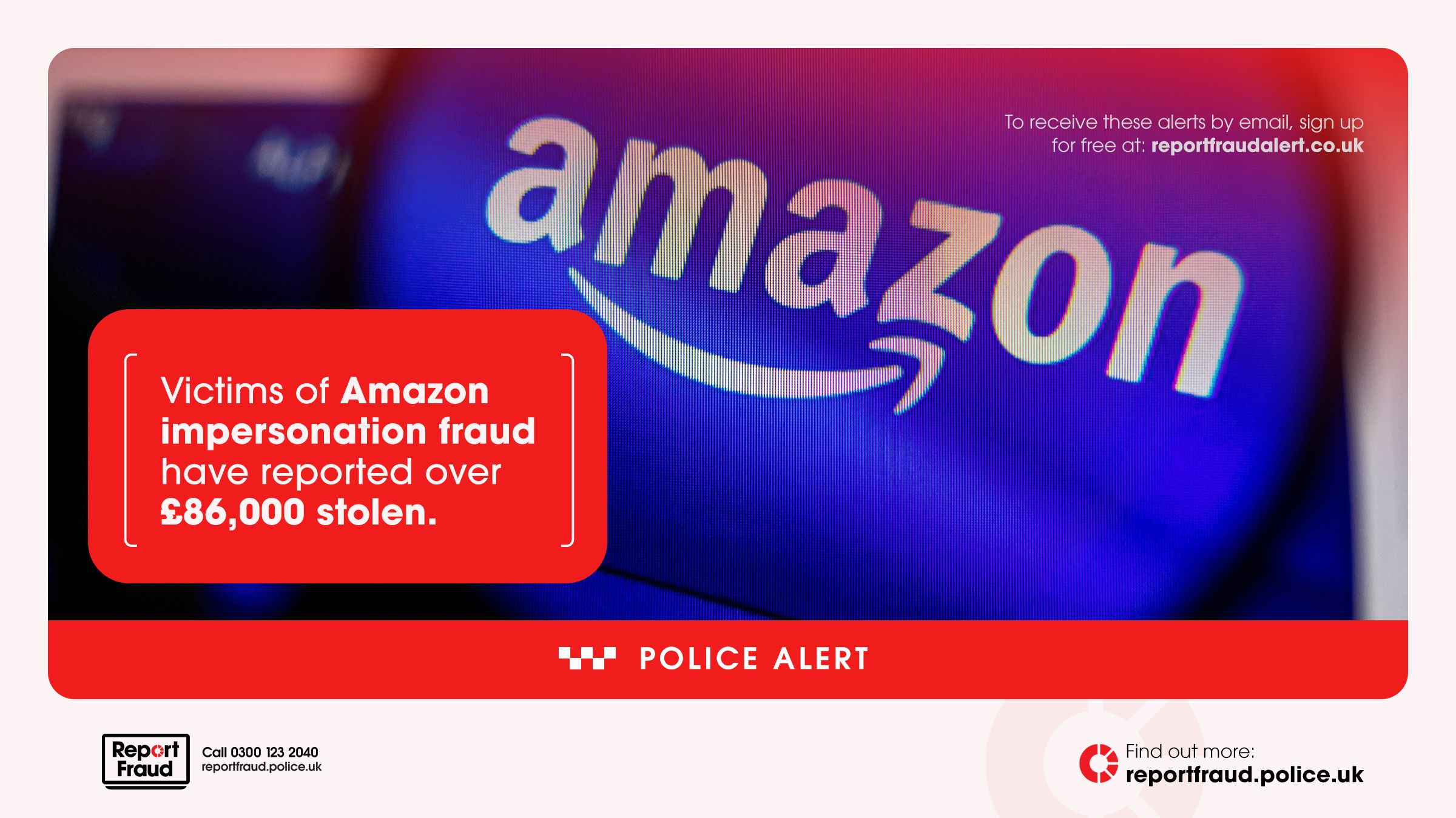
Over a nine day period, between 5-14 October 2026, criminals stole £86,837 from victims, a daily average of over £9,600 while purporting to be representatives from Amazon.
An alert has today been issued (30 October) by Report Fraud, the national cyber crime and fraud reporting service, urging the public about an emerging trend of Amazon impersonation after it was identified in reports made to the service.
Within the nine day period, Report Fraud received 110 reports where Amazon impersonation had been identified, with people aged between 50 to 79 most impacted, accounting for 60 per cent of reports.
Chief Superintendent Amanda Wolf, Head of Report Fraud Operations, said:
“Fraudsters are increasingly successful when they can make their approach feel ordinary. A call about an account issue, a delivery problem or suspicious activity can catch any of us off guard, particularly when it appears to come from a brand we know and trust.
“The best defence is to pause. Criminals want people to react quickly; we want people to take a moment, challenge what they're being told and verify it through a trusted route.
“Whether somebody claims to be from Amazon, your bank, the police or any other organisation, don't feel pressured into acting immediately. End the conversation, find the genuine contact details yourself and make contact independently.
“If there is a legitimate reason for the contact, the caller will understand why you want to verify who you're speaking to and call back using a trusted and published phone number.
“A few moments of caution can make all the difference.”
An Amazon Spokesperson said:
“Scammers that attempt to impersonate Amazon put consumers at risk and there are a variety of scams that ask people to make payments by email, phone, or text for items or services. Be wary any time someone tries to convince you that you must act now - scammers may try to create a sense of urgency to persuade you to do what they're asking, and they use convincing tactics to reel consumers in. We encourage consumers to report suspected scams to us so that we can protect their accounts and refer bad actors to law enforcement to help keep them safe.”
Analysis of Report Fraud data identified an emerging trend in reporting which involves a victim being contacted by the criminal claiming to be from Amazon who informs them of alleged suspicious activity on their Amazon account.
The criminals then claim that unauthorised items have been added to the victim’s Amazon basket. To make the fraud appear genuine, they provide delivery addresses that do not belong to the victim and claim that someone is attempting to purchase the items using the victim’s bank details.
The criminal then tells the victim that the transactions can be stopped and their account secured, but only if they follow specific instructions including:
- Victims asked to share their screen through messaging platforms as part of a resolution process and download money transfer apps. Criminals then use these apps to move money into accounts they control.
- Victims told to provide legitimate documents, such as a passport or driving licence, for "verification" purposes. Criminals use this information to facilitate the fraud and transfer money.
- Victims persuaded to download remote access software, allowing criminals to take control of the device and carry out transactions on the victim's behalf to steal funds without their knowledge.
- Victims are told that gift cards have been added to their Amazon basket without permission. Criminals then claim urgent action is needed to stop the purchases and trick victims into authorising payments, which are instead sent to accounts under the criminals' control.
How to protect yourself
Remember that genuine service providers, banks and the police will never call asking you to transfer money, share personal financial details or hand over remote control of your computer, phone or other device.
If you’ve received a call that doesn’t feel right, STOP!
- Hang up.
- Check if it’s genuine: contact the organisation directly using contact details you know are correct, such as those on an official website or app, or by calling 159 if you need to contact your bank.
- Don’t trust the Caller ID display on your phone – it’s not proof of ID.
- Report it by sending a text to 7726 with the word ‘Call’ followed by the scam caller’s number.
If you believe you are a victim of fraud, you should tell Report Fraud online or by calling 0300 123 2040. If you live in Scotland, contact Police Scotland on 101.
Amazon’s resources & tips
-
Please see our latest Trustworthy Shopping Experience Blog post, which we also emailed to our customers earlier this year, in addition to 6 tips to help you spot and avoid scams impersonating Amazon.
-
Also please see our help pages to find additional information on how to identify scams, including this page on Common Gift Card Scams.
Some tips to avoid falling victim include:
-
Trust Amazon-owned channels: when dealing with your Amazon account, always go through the Amazon mobile app or website when seeking customer service, tech support, or when looking to make account changes.
-
Never pay over the phone: Amazon will never ask you to provide payment information, including gift cards (or "verification cards," as some scammers call them) for products or services over the phone.
-
Verify links first: review the link for misspellings or repeated characters.
-
Verify email senders: review email senders before clicking on email attachments. In your web browser, hover over the display name under "From" to see full sender address. Look for misspellings or added or substituted characters.
-